Tag: Snippet of experience

  • Silane ain’t silent

    Silane ain’t silent

    Making an explosive gas out of sand, magnesium and drain cleaner

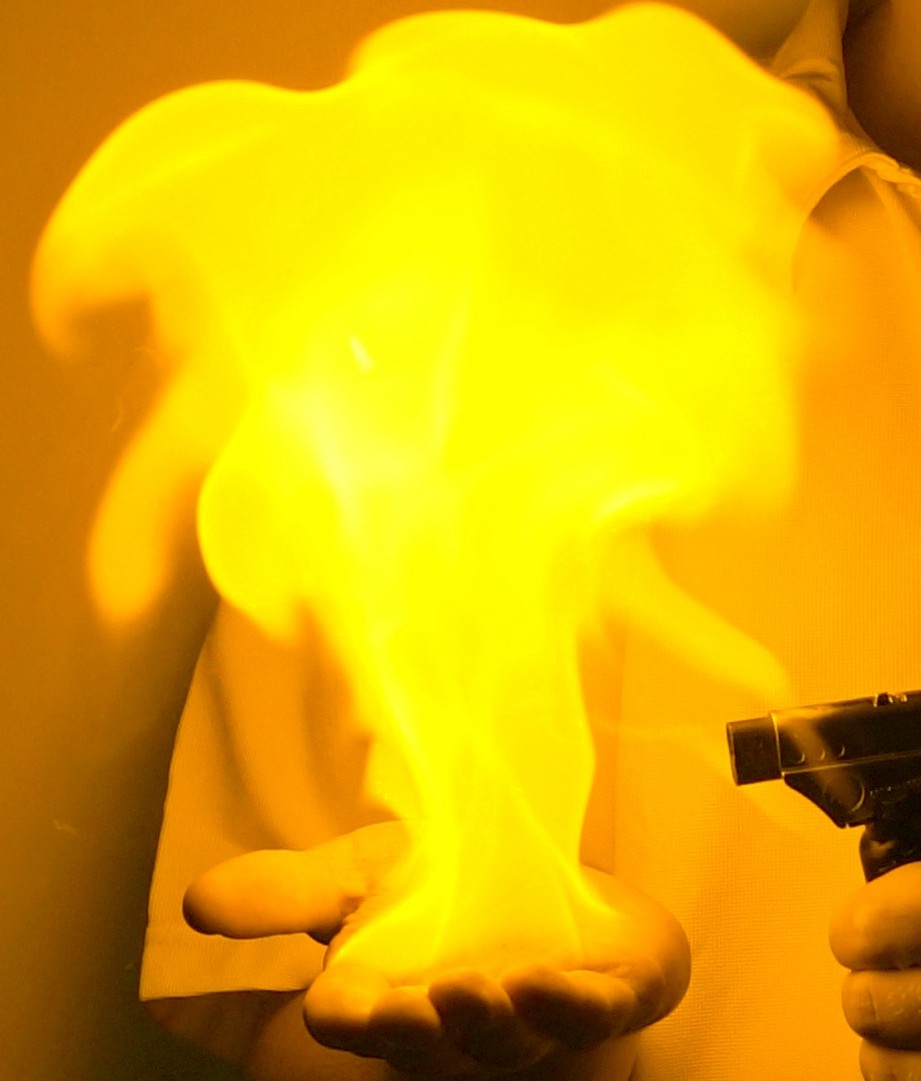
    As you’ve probably noticed from my previous articles, I really enjoy making things light up, whether it’s through fluorescence, chemiluminescence, or simply causing them to explode. Today, I’ll share with you how my friend Máximo and I made a gas that does the job for you: it explodes on its own, it’s pyrophoric! Combining a few easily accessible materials, we synthesised silane (SiH4), the analogue of methane (CH4) that ignites and explodes upon contact with air.

    Chemistry is cooking

    In a beaker, we added a handful of magnesium powder and a few pinches of sand, using a rather unscientific approach. We mixed them up and put them in a boiling tube, covering the mixture with a bit of extra sand to prevent pesky oxygen (O2) from oxidising our magnesium. We then put it on a clamp stand outside (somewhere no one could see us) and placed a Bunsen burner beneath it. We lit up the gas and walked a few metres back.

    Magnesium silicide formation. NOT MY OWN VIDEO. By Petrovskyz, can be found at https://en.wikipedia.org/wiki/Magnesium_silicide.

    It got scary. Smoke started seeping out, the sand-magnesium mixture turned black, and we heard glass cracking. In case it exploded, we took a long branch and launched the Bunsen burner far away, then ran to turn off the flame before our school went down in flames. I guess we were simultaneously crazy scientists and pyromaniac baseball players scoring a home run.

    After waiting for the threat to subside, we approached the boiling tube, wrapped it in paper, and broke it with a stone, releasing the shiny crystals formed inside.

    Magnesium silicide crystals formed after heating up silicon dioxide and magnesium powder. OWN IMAGE.

    In this process, amorphous silicon (Si) and then magnesium silicide (Mg2Si) are formed via the following reactions:

    1. SiO2(s) + 2Mg(s) → Si(s) + 2MgO(s)

    2. 2Mg(s) + Si(s) → Mg2Si(s)

    Magnesium silicide is the compound that forms the black-violet crystals pictured above.

    Magnesium silicide structure. By ShutterWaves – Own work, CC BY-SA 4.0, https://commons.wikimedia.org/w/index.php?curid=86444343

    We took the magnesium silicide crystals and ground them up in a mortar and pestle to increase their surface area. Then, we prepared a beaker containing a pint of dilute hydrochloric acid (HCl) and placed it on the magnetic stirrer in our darkened fume hood. To make silane, we added the magnesium silicide powder to the hydrochloric acid, producing the following reaction:

    Mg2Si(s) + 4HCl(aq) → 2MgCl2(aq) + SiH4(g)

    The silane bubbles out of solution, and when it comes in contact with the air… BOOM! This is one of the reactions where silane explodes upon coming in contact with air:

    SiH4(g) + 2O2(g) → SiO2(s) + 2H2O(g) 

    A whirlpool of fireworks in a beaker of drain cleaner

    To get the best views of this spectacle, you can watch my video in full screen.

    Silane explodes in contact with air. Own video. © All rights reserved.
  • Wintergreen in summerwhite

    Wintergreen in summerwhite

    Delighting the senses with the power of chemistry

    Not only can science satisfy our deeply ingrained human desire to learn about the world around us, but it can also please the finest of tastes. Today we will be synthesising two chemicals that know just right which receptors to hijack in our nose: methyl salicylate and butyl salicylate.

    Esters

    Oh, gummy bananas! How can the copy smell better and stronger than the real thing!? One word: chemistry. You might be disappointed to know that with a lab and a few chemicals, one could very easily trick you without setting foot on a banana plantation.

    Banana gummies. Designed by Freepik; can be found at: https://www.freepik.com/free-photo/overhead-view-gummy-banana-candies-blue-backdrop_2708857.htm

    Esters are famous for their strong smells and are commonplace in fragrances and aromas in almost everything you can imagine, from cosmetics to food products. They are a type of compound in the form R-COO-R’, which generally form from the condensation of a carboxylic acid (R-COOH) with an alcohol (R’-OH), giving water (H2O) as a side product. This specific process for forming an ester is known as Fischer esterification. The mechanism by which this process occurs is illustrated below.

    Fischer esterification. By V8rik (talk) – Own work (Original text: I created this work entirely by myself.), Public Domain, https://commons.wikimedia.org/w/index.php?curid=6800327

    Now, depending on the alcohol (R-OH) and carboxylic acid (R-COOH) used, different esters, and therefore different aromas, can be formed, as shown in the table below.

    Combinations of alcohols and carboxylic acids give different esters and their corresponding smells. Image by James Kennedy and can be found at: https://jameskennedymonash.wordpress.com/wp-content/uploads/2013/12/table-of-esters-and-their-smells.jpg

    Like archaeologists sifting through layers of soil, my friend Máximo and I painstakingly combed through the safety cabinet in our lab, choosing methanol and n-butanol as our alcohol protagonists. To accompany them in their theatre performance, we decided to use salicylic acid, a key precursor to aspirin, as their partner-in-esterification. This would give us two compounds: butyl salicylate (ascribed to an intense raspberry aroma) and methyl salicylate (famously known as wintergreen).

    Methyl salicylate is one of the most well-known esters, as it’s used to aromatise gum, root beer and medicines, amongst many others. It has a strong minty smell and was first extracted from the plant pictured at the beginning of this article, American wintergreen (Gaultheria procumbens), which can be used to make “oil of wintergreen”. Hence, while dressed in a white lab coat and at the dawn of a hot Spanish summer, we got straight to work on creating this refreshing aroma.

    We only needed two test tubes and a beaker of hot water. In equal quantities, we added butanol to one test tube and methanol to the other. Then, we added a few grams of salicylic acid and stirred it around. We added a dash of 96% sulphuric acid because otherwise the esterification would have taken ages: lowering the pH of the solution catalyses the reaction, saving precious time. Tempus fugit! We put the test tubes in a beaker of hot water and waited about an hour. Unless you want to experience the dizzying and overwhelmingly wonderful mix of raspberry, mint, sulfuric acid, methanol, and butanol smells, then please do this under a fume hood.

    A punch in the face

    We took out the test tubes and probed the magic by pouring their contents into a beaker with sodium hydroxide (NaOH) to neutralise the pesky sulfuric acid.

    WOW!

    Unfortunately, we (still) can’t transmit smells digitally, but believe me, both the delightful wintergreen and raspberry smells were so intensely intoxicating that they gave both of us a (nice?) headache, and even people in other parts of the lab could notice their presence.

    Smelling the esters made. Own video. © All rights reserved.

  • Life’s a flash of burning nitrocellulose

    Life’s a flash of burning nitrocellulose

    I went up on stage. For a moment of suspense that seemed like ages, I rummaged through my pockets and took out a lighter and a string of nitrocellulose pieces stuck with vaseline. As a surprise for the over 300 people in front of me, I ignited it, causing it to burn fiercely. After the few seconds it took to become ashes, I said: “¡Esta es la vida!” (meaning “This is life!” in Spanish). That’s how I started my Baccalaureate graduation speech on the fleetingness of life.

    The nitrocellulose I used was made from scratch by my friend Máximo and me. Until the moment of the graduation speech, absolutely no one but myself knew what I was going to use that nitrocellulose for. However, because of my reputation at school as a chemistry enthusiast, after burning the magic paper on stage, many figured that I had synthesised it.

    A towering polymer

    Cellulose, the most abundant organic polymer on Earth, is a fundamental building block of green plants’ cell walls, as well as algae and oomycetes. The image below perfectly showcases the synergistic power of polymers. This banana species, Musa ingens, native to montane New Guinea, is herbaceous, i.e. non-woody, and thus its very tall stem is mostly built with cellulose, not lignin.

    Musa ingens. By Cheongweei Gan – https://www.inaturalist.org/observations/254145814, CC BY 4.0, https://commons.wikimedia.org/w/index.php?curid=162187119

    Cellulose is a polysaccharide made of chains of β-glucose (C6H10O5) joined by 1-4 bonds (from carbon 1 to carbon 4), as shown in the image below.

    Cellulose’s repeating unit (monomer) is β-glucose. By Chembro-lignin – Own work, CC BY-SA 4.0, https://commons.wikimedia.org/w/index.php?curid=169465667

    Usually, cellulose burns relatively slowly, requiring an external oxidiser such as diatomic oxygen present in the air (O2) to combust. However, if we replace the hydrogen (H) in the hydroxyl groups (OH) with a nitro group (R-NO2), we can make a nitrate ester (R-ONO2). The NO2 in the nitrocellulose is highly oxidative and thus accelerates combustion, as now it doesn’t depend on the oxygen present in the air.

    Nitroxylation on paper

    The process of converting cellulose to nitrocellulose, often wrongly called nitration, is denominated nitroxylation, as what is being formed is not a nitro compound (R-NO2), but a nitrate ester (R-ONO2). The mechanism can be seen below.

    Mechanism of the nitroxylation of cellulose. Image by the Royal Society of Chemistry, which can be found at https://doi.org/10.1039/D3RA05457H.

    To carry out the pictured reaction, nitric acid (HNO3) is used as a “nitrating agent”, and sulphuric acid (H2SO4) as a catalyst, being an excellent proton (H+) donor.

    Nitroxylation of paper

    After understanding the chemical reactions involved and reading the procedure and safety precautions, my friend and I went to the lab in a flash.

    In two beakers, we added some 96% sulphuric acid, which is so viscous you could trick someone into thinking it’s mineral oil. Then, to experiment, instead of using nitric acid directly, we added potassium nitrate (KNO3) that would react with the sulphuric acid to make nitric acid and potassium sulphate (K2SO4). In one beaker we added folded paper towels and in the other, pure cotton. We left it to soak and nitroxylate for around 2 hours.

    My friend, Máximo, on the left, and I on the right, with our two nitrocellulose trials in the background.

    Afterwards, using a glass rod, we took both the paper towel and cotton out and put them in an alkaline solution of sodium hydroxide (NaOH), to neutralise any remaining acid. The two beakers still containing sulphuric and nitric acid were also neutralised with sodium hydroxide until a pH of 7 was reached (tested with pH strips). Following this, the solutions, now only containing innocuous salts, were washed down the drain. It is of paramount importance to make sure chemical waste is properly disposed of to avoid the slightest harm to the environment. How stupid would it be to destroy our beautiful World, the source of our awe!

    The two unappetising solutions of sulphuric and nitric acid where nitrocellulose was in the making.

    The now-nitrocellulose was then washed and placed in a food dehydrator to dry.

    Nitrocellulose placed on a food dehydrator tray. Own image.

    Watch it burn

    After doing my last exam, the afternoon before my graduation day, I tested the nitrocellulose, and it worked wonders for the effect I wanted! The cotton one got more nitroxylated, probably due to a higher initial cellulose purity.

    Nitrocellulose burning.
  • Mirror, mirror on the flask, who’s the hottest of them all?

    Mirror, mirror on the flask, who’s the hottest of them all?

    Heating sugar, two house cleaners, and silver nitrate to make a mirror

    In March 2023, due to our reputation for being science enthusiasts and always messing around in the lab, our school chose us (my friend Máximo and I) to conduct an experiment for its inaugural scientific congress. A few months prior, we had performed the Tollens’ test for fun (as usual) to create a silver mirror on a round-bottomed flask. Hence, for our scientific project, we decided to investigate how the reaction temperature affects the deposition of silver.

    The experiment is very straightforward. First, a few drops of a dilute sodium hydroxide solution (NaOH), used as a household cleaner, are added to a 0.1 mol dm-3 aqueous solution of silver nitrate (AgNO3). This converts the silver nitrate to silver(I) oxide (Ag2O) precipitate via the following reaction:

    2AgNO3(aq) + 2NaOH (aq) → Ag2O(s) + 2NaNO3(aq) + H2O (l)

    Then, an adequate amount of ammonia solution (NH3) (also used as a household cleaner!) is added to convert the silver(I) oxide into the diamminesilver(I) coordination complex ([Ag(NH3)2]+), the main component of Tollen’s reagent. This happens through the following reaction:

    Ag2O(s) + 4NH3 (aq) + 2NaNO3(aq) + H2O (l) → 2[Ag(NH3)2]NO3(aq) + 2NaOH(aq)

    Diamminesilver(I) coordination complex ball and stick model. By Benjah-bmm27 – Own work, Public Domain, https://commons.wikimedia.org/w/index.php?curid=1675829

    The flasks containing the diamminesilver(I) solutions were placed in a water bath and monitored using a thermometer until the desired temperature was reached.

    Now comes the fun part: to make the silver mirror, we only need to add a reducing sugar (glucose). Yes, you heard just right, the solution only requires some sweetening to make the flask shine! We used glucose, but any reducing sugar (containing aldehyde groups) will do.

    Lineal D-glucose structure. By Qohelet12 – Own work, CC0, https://commons.wikimedia.org/w/index.php?curid=152724695

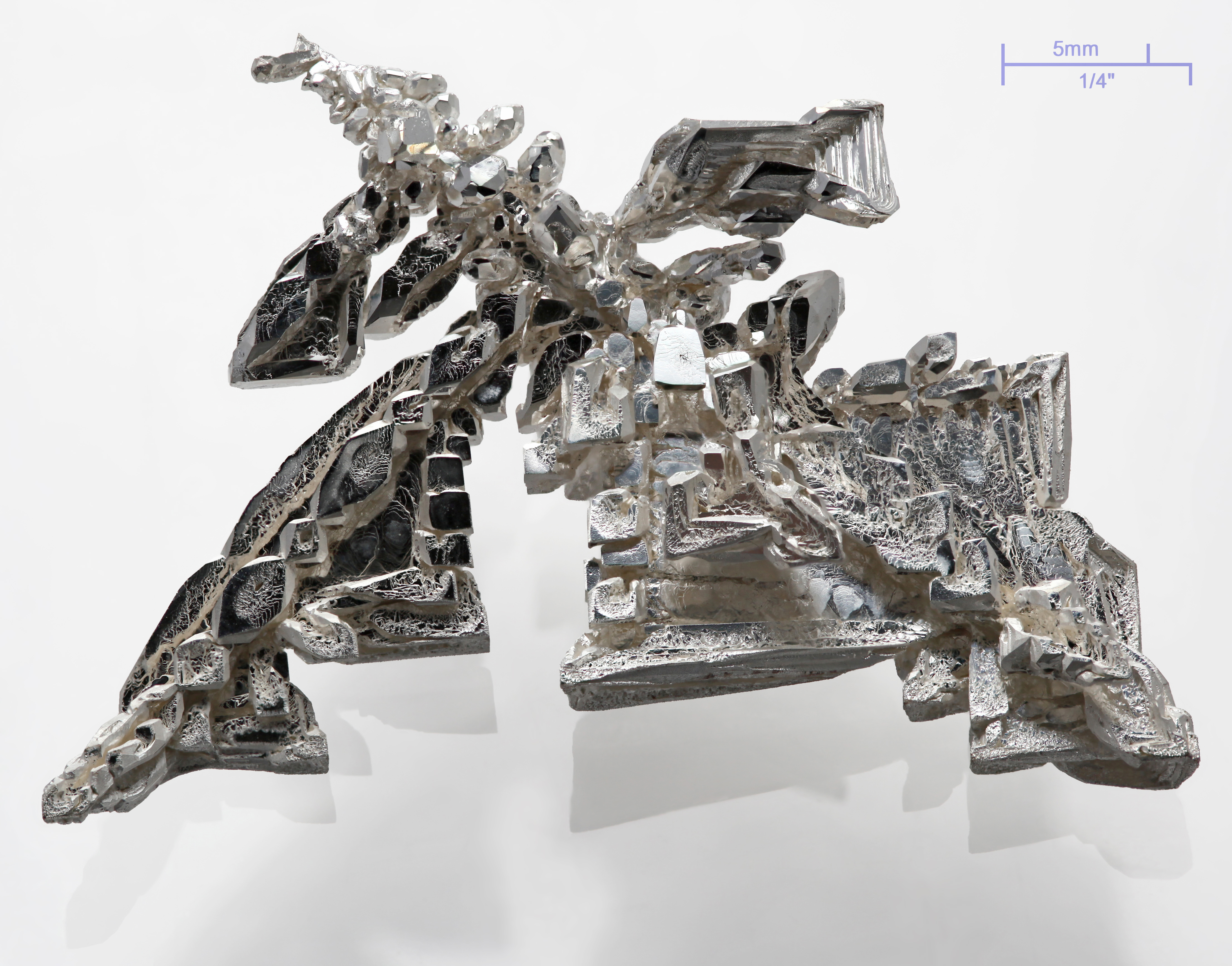
    The reaction that takes place is what Tollens’ test consists of: an aldehyde (R-CHO) is oxidised to a carboxylic acid (R-COOH), and the diamminosilver(I) complex is reduced to elemental silver (Ag), which deposits on the surface of the flask.

    2[Ag(NH3)2]+(aq) + R−CHO(aq) + H2O(l) → 2Ag(s) + 4NH3(aq) + R−COOH(aq) + 2H+(aq)

    My friend Máximo (left) and I (right) in March 2023 with a flask where we made a silver mirror. OWN IMAGE. © All rights reserved.

    We made mirrors on the inside of the flasks at five different temperatures and then weighed them (knowing their initial mass).

    Flask with the silver mirror inside. OWN IMAGE. © All rights reserved.

    After performing the experiment, we produced a graph illustrating the relationship between the mass of deposited silver and the reaction temperature. We found that at higher temperatures, more silver was deposited, probably due to a faster reaction rate (we only allowed the reaction to proceed for a limited time). We then created a poster and a presentation and presented our results at the scientific congress.

    Chemistry doesn’t only bond atoms, it also bonds people!

    With a wealth of additional scientific knowledge, two years after presenting it, we stood next to our poster in admiration, reviving all our lab adventures together. We took a picture so that in a few years, we can look back and admire how far we’ve come on our journey as pursuers of nature’s secrets.

    Us standing next to our silver mirror scientific poster two years after presenting it in the scientific congress. Own image. ©
  • Incandescent copper cent

    Incandescent copper cent

    The cheapest catalyst on the market: a Euro 2-cent to oxidise acetone!

    Catalysis is a crucial process for a myriad of chemical reactions, whereby the catalyst, without being consumed, lowers the activation energy required for the reaction to occur. This increases the proportion of molecules with kinetic energy equal to or greater than the activation energy, and therefore considerably speeds up the reaction. Without catalysts (such as enzymes), this article would never have been written, as most probably humanity wouldn’t even exist.

    Today, we’ll be catalysing the oxidation of acetone (CH3COCH3) with a Euro 2-cent coin, which is made of copper-coated steel.

    Acetone ball and stick model. By Ben Mills – Own work, Public Domain, https://commons.wikimedia.org/w/index.php?curid=2070930

    Crank up the heat!

    The procedure is as straightforward as possible. First, a borosilicate beaker was filled with approximately 20 mL of pure acetone. Then, a 2-cent coin was tied to a copper wire and activated by heating it over a Bunsen burner flame (far away from the acetone). Once the coin was red hot, the wire was tied to a spatula so that the coin hung a few centimetres above the acetone. The magic starts immediately. The reactions involved are the following:

    First, a coating of copper oxide (CuO) is formed when the coin comes into contact with air after being heated with the Bunsen burner.

    Cu(s) + ½O2(g) → CuO(s)

    Then, the copper oxide reacts with the acetone vapours to give ketene, methane, oxygen and copper, regenerating our initial catalyst. Acetone’s oxidation is highly exothermic, causing the coin to glow red-hot and catalyse even more acetone. This process can continue as long as there is sufficient acetone.

    CuO(s) + CH3COCH3(g) → 2CH2CO(g) + 2CH4(g) + Cu(s) + ½O2(g)

    My friend Máximo (left) and I (right) performing the copper coin experiment. Own image.

    To appreciate the beauty and simplicity of the reaction, I actively encourage you to watch the following videos!

    Watch the dancing glow

    A copper coin glowing with dancing acetone vapours. Own video, but audio from https://soundcloud.com/boo-moo-shoo/chopin-nocturne-no20-in-c-minor-free-classical-music. © All rights reserved.

    Yikes, it’s hot!

    The temperature of the coin while it was catalysing the oxidation of acetone. Own image.

    Leidenfrost effect

    The Leidenfrost effect occurs when a water droplet is close to a solid surface that is hotter than its boiling point (100ºC at sea level), such as our copper coin, causing an insulating vapour to form and preventing the droplet from actually touching the surface.

    Leidenfrost effect with a water droplet on a hot copper coin. Own video. © All rights reserved.
    Leidenfrost effect diagram. Not my own image. By Vystrix Nexoth at the English Wikipedia, CC BY-SA 3.0, https://commons.wikimedia.org/w/index.php?curid=15178106

    Beautiful colours

    The surface structure of the oxide layers on this copper wire, which we also used to catalyse the oxidation of acetone, gives rise to beautiful colours.

  • Trying triiodide

    Trying triiodide

    A powder that liberates a purple cloud on the caress of a feather?

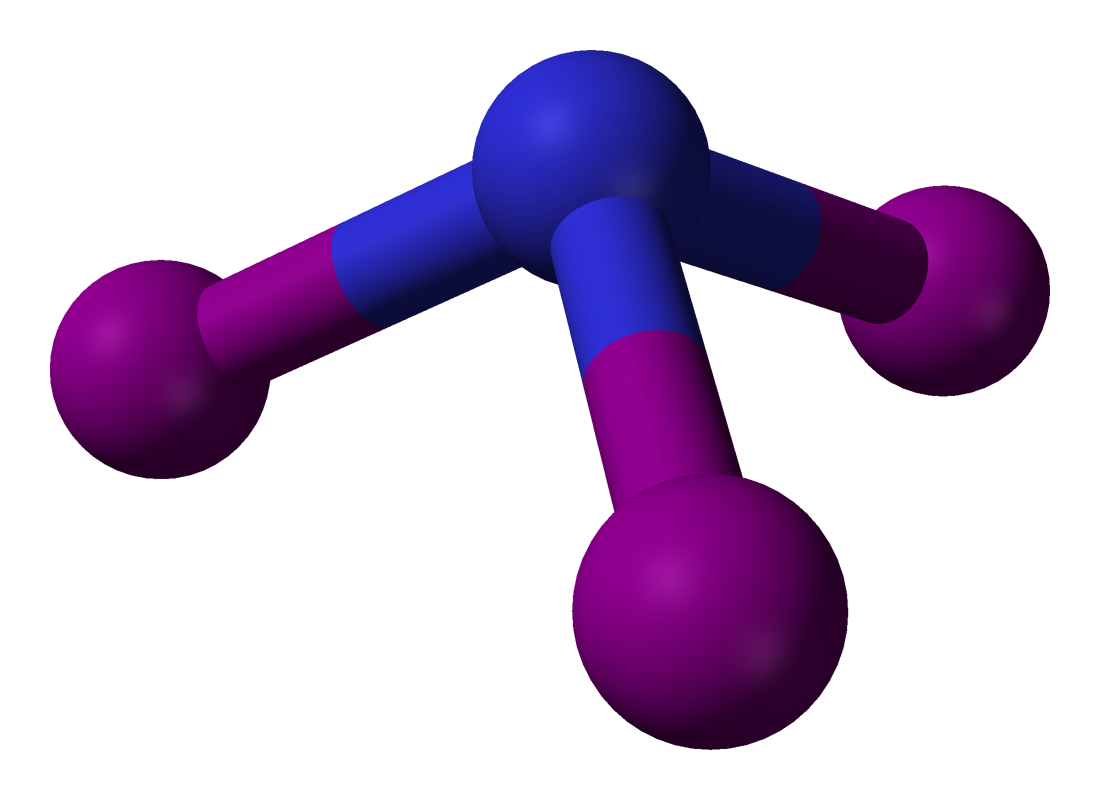
    That’s Nitrogen Triiodide (NI3), a contact explosive that releases nitrogen (N2) and a purple cloud of iodine gas (I2) at the slightest disturbance via the following reaction:

    2 NI3 (s) → N2 (g) + 3 I2 (g) (ΔH=-290 kJ/mol)

    Detonation of Nitrogen Triiodide. NOT MY OWN VIDEO. By Michael Bell at https://en.wikipedia.org/wiki/File:Detonating_Nitrogen_triiodide.webm

    As my friend Máximo and I love both explosive and colourful chemicals, we got straight to making this compound when we had time.

    The preparation is very straightforward; you only need iodine and a standard cleaning product (ammonia) to make this exotic compound. However, I recommend that you not try it at home unless you’re really longing for a purple wallpaper (apart from the fact that it’s dangerous even in small amounts). First, elemental iodine (I2) is ground in a mortar and pestle to increase its surface area. Then, it is added to a dilute ammonia (NH3) solution. The following reaction takes place:

    3I2(s) + NH3(aq) → NI3(s) + 3HI(aq)

    Once the reaction had occurred, the mixture of ammonia and nitrogen triiodide was spread on filter paper and left to dry, as nitrogen triiodide is insensitive to contact when wet.

    We took the wet filter paper outside and left it on a table to dry. A few minutes later, we got near the incipient explosive to detonate it and watch the beautiful purple cloud form.

    What a deception… Despite hearing a small crack, the explosion was far less impressive than we had hoped for, likely due to the infinitesimal quantity we had produced for safety reasons.

    You reap what you sow, and you detonate what you synthesise!

    Nitrogen triiodide “detonation”. Own video.